
The 5 Most Common Mistakes in Road Barrier Installation and How McIntosh Fencing Guarantees Perfection

Road safety barriers are the last line of defence between a vehicle and a potentially catastrophic hazard. Yet, even the highest quality components can fail if the installation is flawed.
Our experience has given us a behind-the-scenes view of the most common, and most critical, pitfalls in road crash barrier installation. Here are the five mistakes that compromise safety, and how our quality control system guarantees perfection.
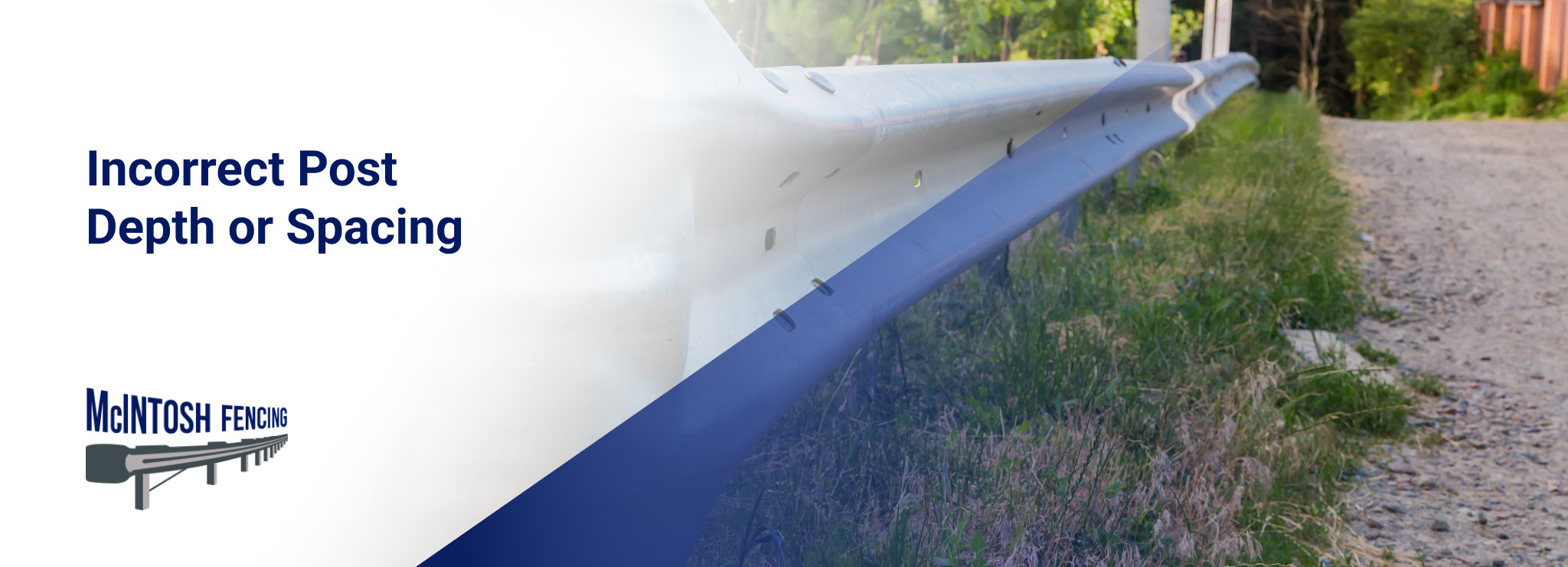
The foundation of any barrier system is its posts. If posts are not driven to the precise depth specified by engineering plans, or if the spacing between them is inconsistent, the entire system’s ability to absorb energy is compromised.
- The Mistake: Posts that are too shallow can easily pull out of the ground upon impact. Posts that are too deep or incorrectly spaced can make the barrier too rigid, causing a vehicle to rebound dangerously instead of being safely redirected.
- The McIntosh Guarantee: Our Tri-Certification Accreditation—including the rigorous AS/NZS 4801 for Occupational Health and Safety—demands strict adherence to installation tolerances. Our installation teams use certified templates and depth gauges, ensuring every post contributes correctly to the system’s kinetic energy absorption.
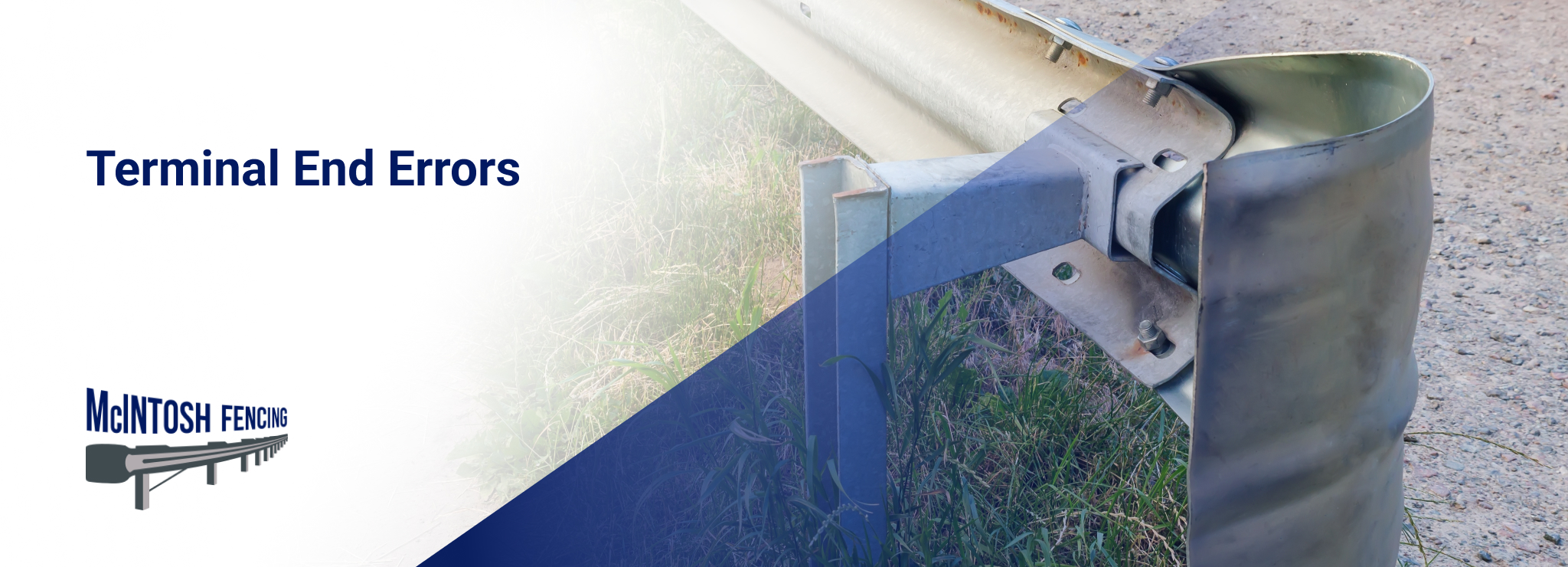
The transition points at the beginning and end of a barrier run—known as the terminal ends or crash attenuators—are arguably the most critical component. They are designed to safely absorb impact or redirect a vehicle that hits the barrier head-on.
- The Mistake: Poorly installed or incorrect terminal ends can cause the guardrail to buckle or penetrate the errant vehicle, turning a survivable impact into a tragedy.
- The McIntosh Guarantee: We ensure the use of MASH-compliant terminal ends tailored to the specific barrier type (e.g., W-Beam or wire rope systems). Our quality assurance checks strictly verify that every terminal is anchored correctly, ensuring the system functions exactly as crash-tested.
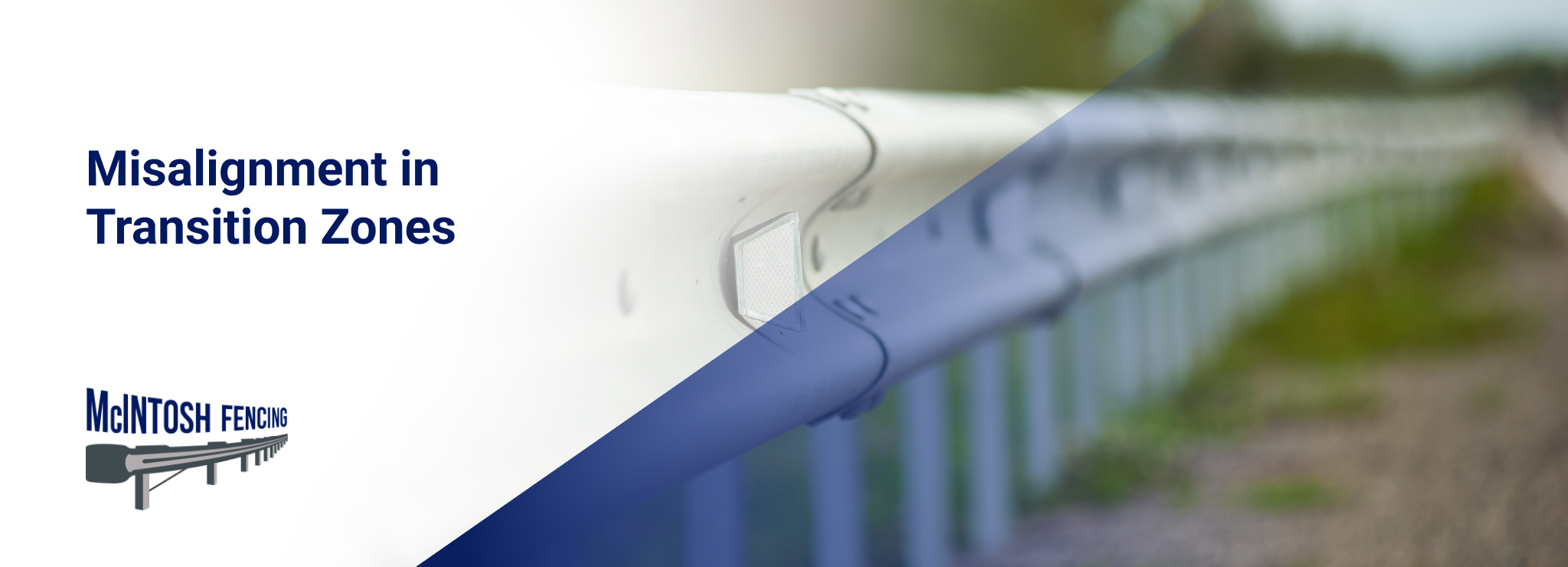
A transition zone is where one barrier type (e.g., a wire rope system in a median strip) seamlessly connects to another (e.g., a rigid concrete structure at a bridge abutment).
- The Mistake: Any gap, sharp angle, or failure to properly bolt these transition sections creates a snag point. If a vehicle hits this point, it can stop abruptly, resulting in severe passenger injury or vehicle penetration.
- The McIntosh Guarantee: Our installation process includes a specific focus on seamless integration. We manage complex projects for major clients like Roads and Maritime Services (NSW) and VicRoads, proving our expertise in engineering transitions that ensure a smooth, continuous line of containment for the vehicle.
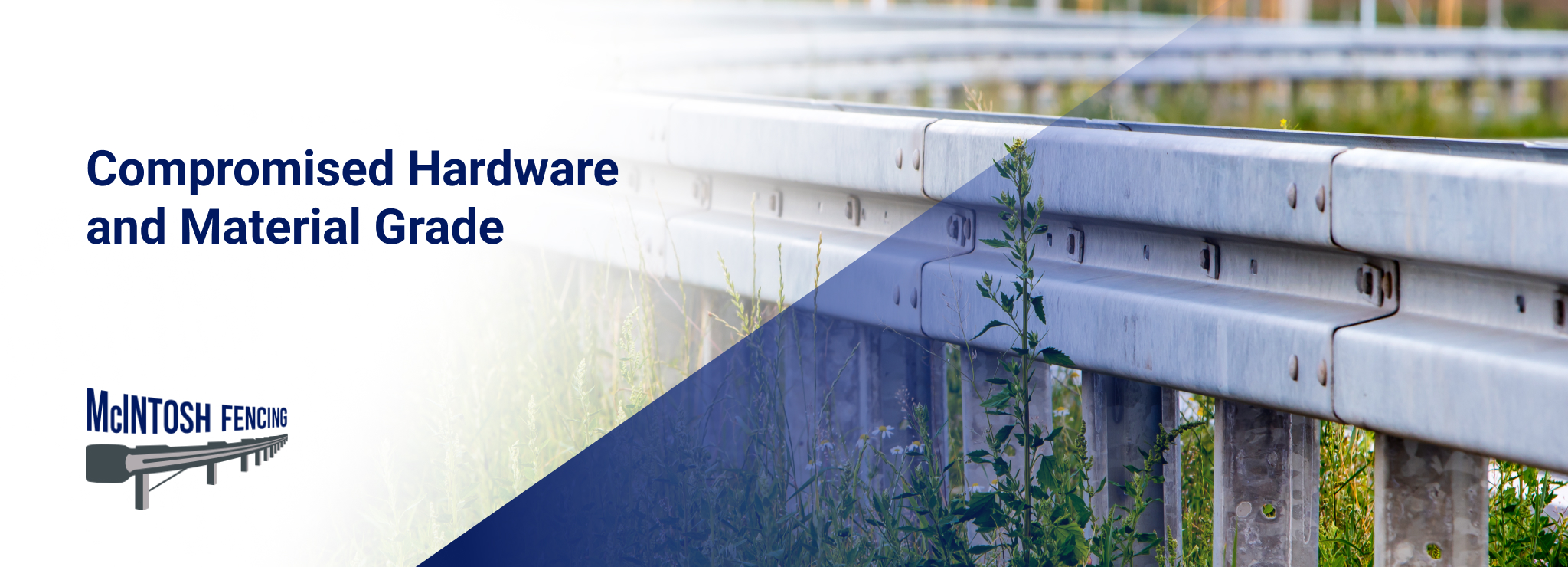
Cutting costs by using lower-grade bolts, spacers, or steel with inferior galvanisation severely compromises the long-term viability and integrity of the barrier.
- The Mistake: Cheap, non-compliant hardware is prone to premature rust and corrosion, especially in Australia’s coastal or high-humidity environments. This corrosion weakens the system, leading to unexpected failure years before its intended lifespan.
- The McIntosh Guarantee: We are an Australian-owned family business committed to using locally sourced, high-grade Australian materials. Our ISO 9001 Quality Management System ensures every component, down to the smallest bolt, meets Australian Standards for durability and strength, delivering a superior, long-lasting safety solution.
Not all roads are created equal. A solution for a flat, straight highway will not work for a winding, rural road with variable terrain.
- The Mistake: A contractor installs a standard barrier without adjusting for factors like soil composition, slope, embankment height, or proximity to fixed hazards. This leads to an inappropriate barrier choice that offers insufficient protection.
- The McIntosh Guarantee: Our expertise allows us to tailor crash barriers to unique road conditions, ensuring optimal protection where it’s needed most. Whether it’s selecting flexible wire rope systems for winding roads or heavy concrete barriers for high-risk bridge edges, our process begins with an expert site assessment, ensuring the right solution is installed right, every time.
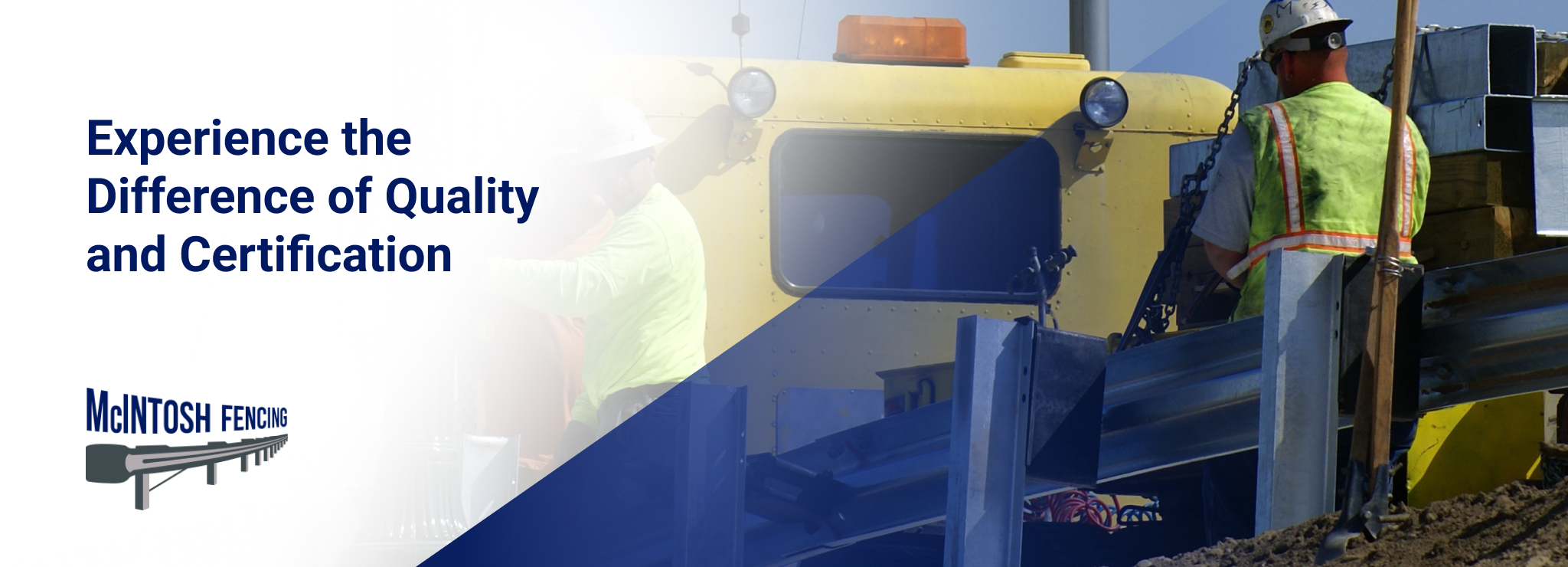
When you choose McIntosh Fencing, you are choosing a partner dedicated to eliminating these critical mistakes. Our integrated management systems and commitment to quality assured MASH compliance mean we don’t just install barriers—we guarantee safety.
Contact McIntosh Fencing today for expert advice on your next road safety project and experience the confidence that comes with certified, perfected installation.